Free printable · 1-page PDF
Water bath or pressure canner? Know at a glance.
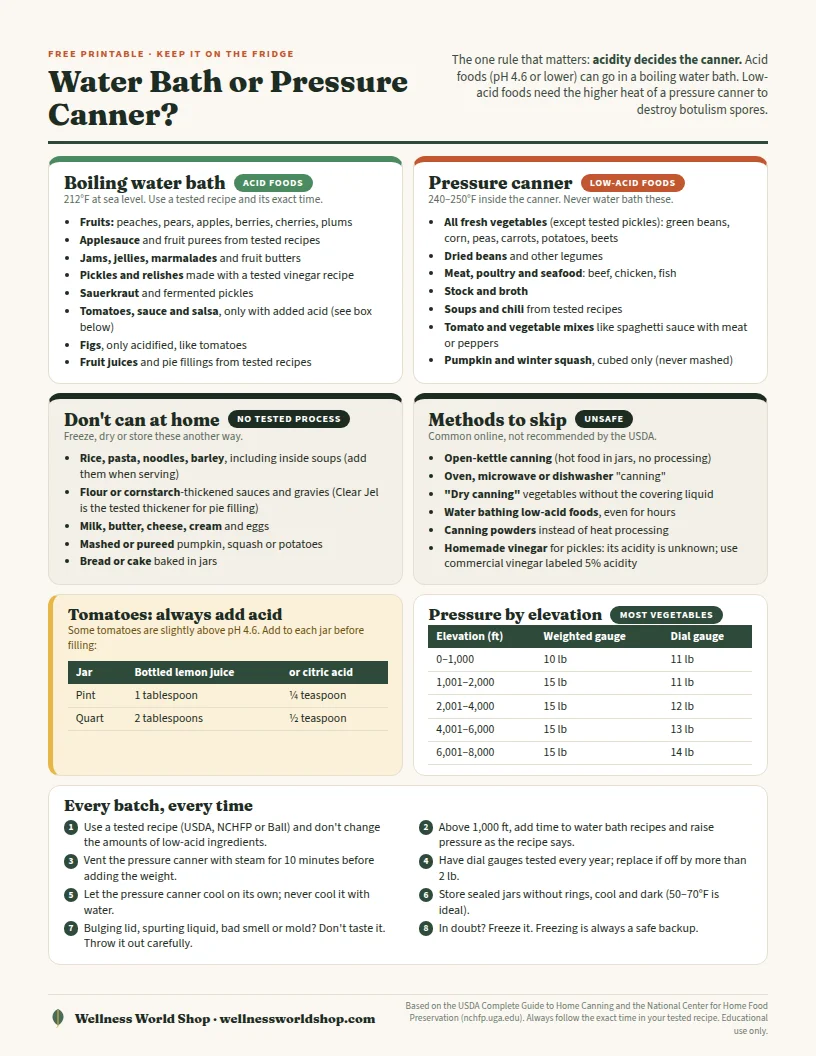
The question new canners ask most is also the one that matters most for safety. Get our free one-page cheat sheet, based on USDA guidance, and keep it on the fridge.
- Which foods are safe in a boiling water bath, and which always need a pressure canner
- Foods and methods with no tested process (rice, dairy, oven canning and more)
- How much lemon juice or citric acid to add to tomatoes
- Pressure by elevation for weighted and dial gauges
The short version
Why the canner matters
Whether a food goes in a boiling water bath or a pressure canner depends on its acidity. Acid foods, with a pH of 4.6 or lower, include most fruits, pickles, jams and properly acidified tomatoes; boiling water is enough for them. Low-acid foods, such as fresh vegetables, beans, meat, poultry, seafood and broth, can carry botulism spores that survive boiling. They need the 240 to 250°F that only a pressure canner reaches.
That is why green beans can't be made safe in a water bath, even with a long boil, and why tested recipes ask you to add lemon juice or citric acid to tomatoes. When a recipe doesn't come from a tested source, freezing is always the safe backup. Some foods, like rice, dairy and mashed pumpkin, have no tested home-canning process at all.
Based on the USDA Complete Guide to Home Canning and the National Center for Home Food Preservation. Always follow the exact processing time in your tested recipe.