Home › Food storage guides
How to store food without a refrigerator (a power outage food plan)
Short answer: keep the doors shut. A closed refrigerator keeps food cold for about 4 hours; a full freezer holds its temperature for about 48 hours (24 if half full). After that, move cold food to coolers with ice, and toss perishables that sat above 40 °F for 4 hours or more. For a longer outage, the real plan is a pantry of foods that never needed a fridge in the first place.
Step 1: Know your clock
The moment the power goes out, your refrigerator and freezer become insulated boxes, and every time you open them you lose cold air. According to the FDA, an unopened refrigerator keeps food cold for about 4 hours, while a full freezer keeps its temperature for about 48 hours, or about 24 hours if it is half full. That is why the most useful thing you can do in the first hours is nothing: decide what you need, open the door once, and close it fast.
| Refrigerator, door closed | About 4 hours |
|---|---|
| Full freezer, door closed | About 48 hours |
| Half-full freezer, door closed | About 24 hours |
| Safe fridge temperature | 40 °F or below |
| Safe freezer temperature | 0 °F or below |
Step 2: Prepare before the next outage
- Put appliance thermometers in the fridge and the freezer. When the power comes back, the number tells you what is safe, so you don't have to guess.
- Freeze containers of water ahead of time. They help the freezer stay cold longer and become ice for a cooler later.
- Keep one or two coolers ready for refrigerated food if the outage will last more than 4 hours.
- Group frozen food together so it stays cold longer, and keep the freezer as full as you reasonably can.
Step 3: Decide what to keep and what to toss
Once the 4-hour window passes, food in a fridge that has been above 40 °F needs a decision. Extension guidance based on USDA advice sorts the usual fridge contents roughly like this. When in doubt, throw it out, and never taste food to check it: food can look and smell fine and still carry enough bacteria to make you sick.
| Usually OK to keep | Hard and processed cheeses, butter or margarine, whole fresh fruits and vegetables, opened jelly and peanut butter, ketchup and mustard, bread and fruit juices. Discard anything moldy or with an unusual smell. |
|---|---|
| Discard | Meat, poultry, fish and eggs, milk, cream and yogurt, soft cheeses, lunch meats, casseroles and leftovers, and creamy dressings. |
| Freezer food | If it still has ice crystals or reads 40 °F or below, it is safe and can be refrozen. The quality may suffer, but the safety doesn't. |
Free printable: water bath or pressure canner?
Planning to stock your own shelves? One page with which foods go where, the "don't can" list, tomato acid amounts and pressure by elevation.
Get the free cheat sheet →Based on USDA guidance · printable PDF
Step 4: Build a pantry that doesn't need a fridge
Ice buys you a day or two; a shelf-stable pantry buys you much more. Ready.gov recommends keeping at least a several-day supply of non-perishable food and suggests foods like these:
- Ready-to-eat canned foods: meats, fish, fruits, vegetables, beans and soups that you can eat without cooking if you have to.
- Dry staples: dry cereal or granola, crackers, protein or fruit bars, dried fruit and nuts.
- Protein that keeps: peanut butter and other nut butters.
- Drinks: canned juices and non-perishable pasteurized milk (the shelf-stable boxes).
- The easy-to-forget items: a manual can opener, eating utensils, food for any infants and anyone's special dietary needs.
Pick food your household already eats, so you can rotate it into normal meals and replace it as you go instead of finding a box of expired cans years later.
Step 5: Store it so it lasts
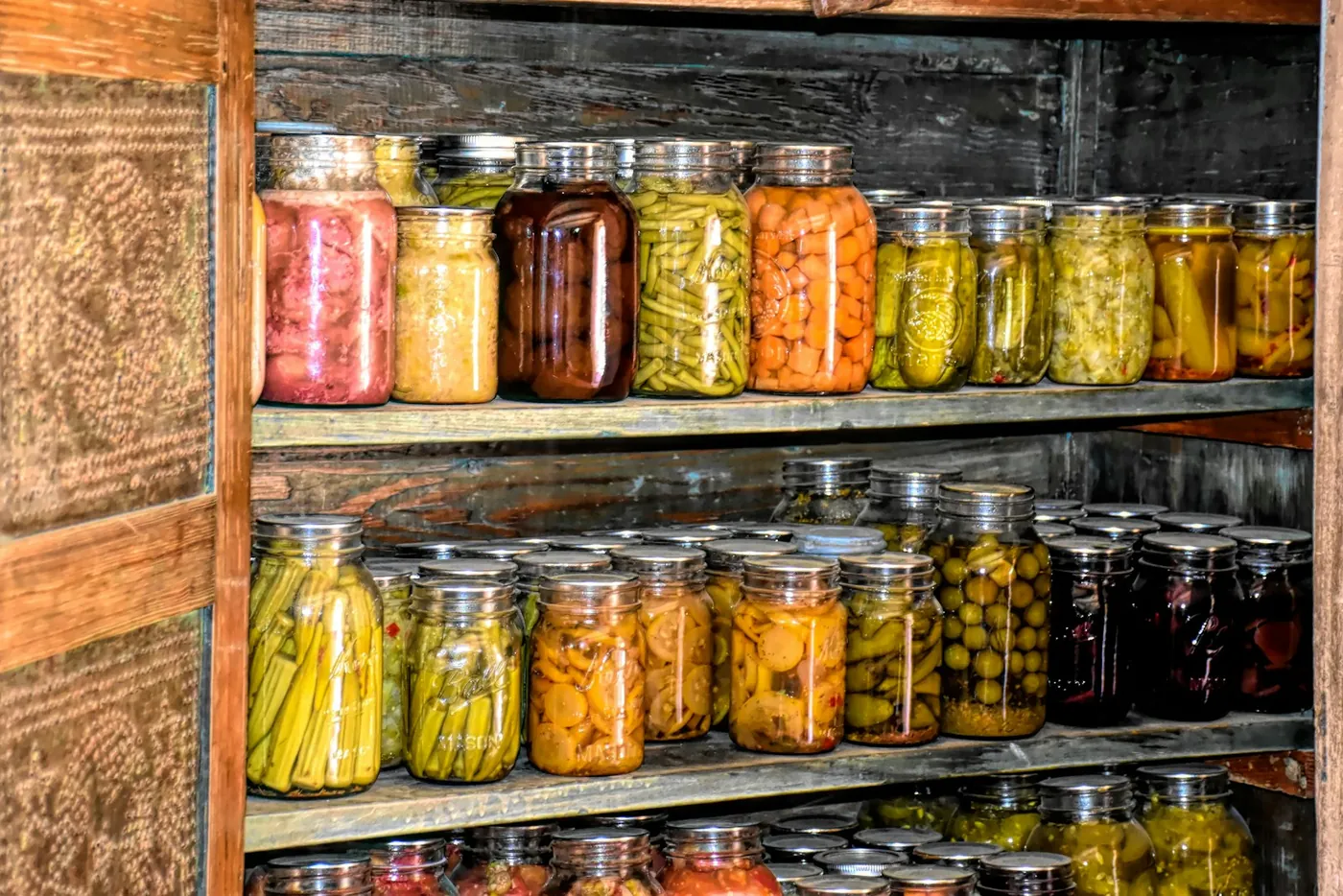
Where you keep shelf-stable food matters almost as much as what you buy. Penn State Extension recommends storing canned goods, including home-canned jars, in a cool, dry, dark place between 40 and 70 °F, away from furnaces, heating pipes and direct sunlight, and never above 90 °F, where jars can spoil and lose their seal. Most home-canned foods keep their best quality for up to a year. If you can at home, follow only tested recipes, and remember that some foods have no safe home-canning process at all (see foods you shouldn't can at home).
For a deeper look at older, low-tech ways to keep food without electricity, our reviews of The Lost SuperFoods and The Lost Frontier Handbook cover what each book teaches and who it suits. Treat any traditional method as a project to check against current USDA and NCHFP guidance before you rely on it.
Frequently asked questions
Can I put food outside in the snow during a winter outage?
It's risky. Outdoor temperatures swing, the sun can warm containers even on a cold day, and animals can get into food. Coolers with ice, or the closed freezer, are more reliable.
The power came back and my freezer food is partly thawed. Is it safe?
If it still contains ice crystals or a thermometer shows 40 °F or below, it is safe to refreeze or cook. Texture may change, especially in fruits and vegetables.
How much food should I keep for an outage?
Ready.gov's baseline is at least a several-day supply of non-perishable food per household, plus a manual can opener. Many families build up from there to a week or more.
Is a jar of home-canned food still safe after a year?
The one-year guideline is about quality, not a safety deadline. Before using any jar, check that the lid is still sealed and that there are no signs of spoilage such as bulging, leaking, spurting liquid or an off smell; if there are, discard it without tasting.
Sources: U.S. Food and Drug Administration, "Food and Water Safety During Power Outages and Floods"; Ready.gov, "Food"; Clemson Cooperative Extension HGIC, "Food Safety in Power Outages" (based on USDA FSIS guidance); Penn State Extension, "Storage Guidelines for Home-Preserved Foods"; National Center for Home Food Preservation (nchfp.uga.edu). This article is educational and is not a substitute for local emergency instructions.

Free guide
10 healing herbs you can grow at home
Get our printable Backyard Herbal Starter Guide free: planting, harvesting and safety notes for chamomile, calendula, echinacea and more.