Home › Food storage guides
How to store emergency water at home
Short answer: store at least 1 gallon of water per person, per day, for at least 3 days, and aim for a 2-week supply if you can (CDC). Unopened store-bought water is the safest option. If you fill your own, use food-grade containers (not old milk or juice jugs), keep them cool, dark and away from chemicals, and replace the water every 6 months.
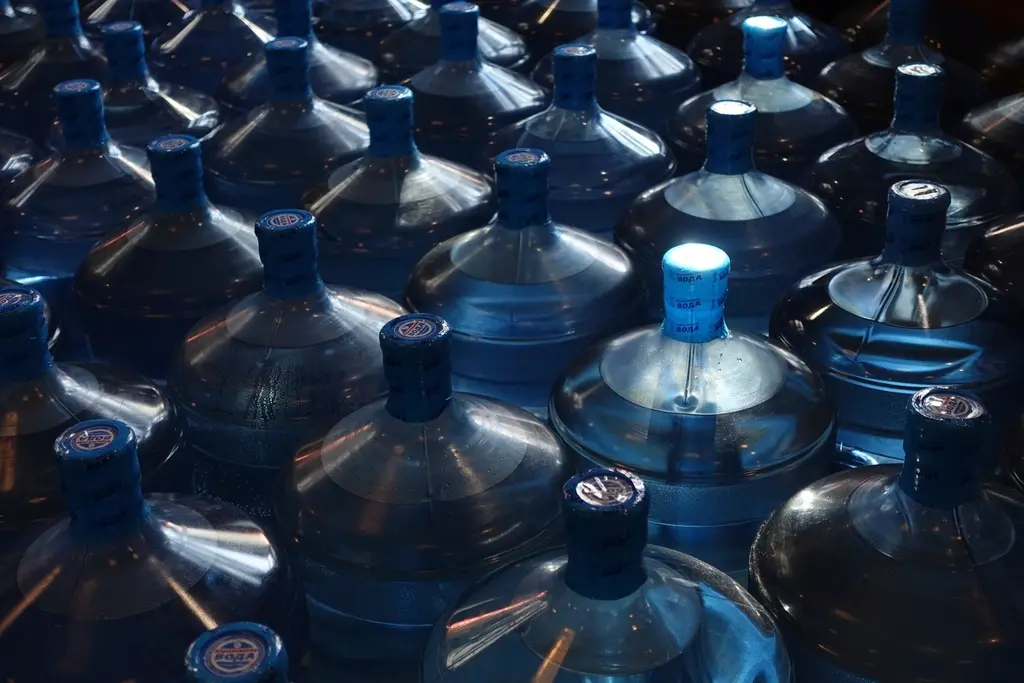
How much water do you need?
The CDC's rule of thumb is simple: at least 1 gallon per person, per day, for 3 days, and a 2-week supply if possible. That gallon is not all for drinking. Ready.gov notes that a normally active person needs about three quarters of a gallon of fluid a day; the rest covers cooking and basic sanitation.
Plan for more than the minimum if your household includes children, nursing or pregnant women, or someone who is sick, if you have pets, or if you live somewhere hot. Ready.gov points out that in very hot temperatures, water needs can double.
| 1 person, 3 days | 3 gallons (minimum) |
|---|---|
| 1 person, 2 weeks | 14 gallons |
| Family of 4, 3 days | 12 gallons (minimum) |
| Family of 4, 2 weeks | 56 gallons |
Fourteen gallons a person sounds like a lot, so build it in steps: get the 3-day minimum first, then add a few gallons each time you shop.
Option 1: buy bottled water (the easy, safest route)
According to the CDC, unopened, commercially bottled water is the safest and most reliable source of water in an emergency. Keep it in the sealed original container, store it in a cool, dark place, and check the expiration or "use by" date when you rotate your supplies. Use the oldest cases first and replace them to keep the stock fresh.
Option 2: fill your own containers
Filling your own is cheaper, but the container matters. The CDC says it is best to use FDA-approved food-grade water storage containers, which won't transfer toxic substances into the water. If you use something else, it should have a tight-closing lid, be made of durable, unbreakable material (not glass) and ideally have a narrow opening.
Containers to skip:
- Milk and fruit juice jugs. The FEMA and American Red Cross booklet Food and Water in an Emergency explains that milk protein and fruit sugars can't be adequately removed from them, which leaves room for bacteria to grow. Cardboard cartons leak and aren't made for long-term storage.
- Anything that held chemicals, such as bleach or pesticides (CDC).
- Glass, because it is heavy and breaks.
If you want to reuse something, the same FEMA and Red Cross booklet suggests two-liter plastic soft drink bottles.
How to clean and fill a container
- Wash it with dish soap and water, then rinse well so no soap is left.
- Sanitize it: mix 1 teaspoon of unscented liquid household chlorine bleach in 1 quart (4 cups) of water, cap the container and shake so the solution touches every inside surface. The CDC says to wait at least 30 seconds before pouring it out.
- Let it air-dry (CDC) or rinse it with clean water (FEMA/Red Cross booklet).
- Fill it with clean tap water. If your utility treats tap water with chlorine, the FEMA/Red Cross booklet says you don't need to add anything. If your water comes from a private well or another untreated source, treat it first by following the CDC's "Making Water Safe in an Emergency" instructions for your bleach strength.
- Close it tightly without touching the inside of the cap, and label it "drinking water" with the date.
Free printable: build a pantry that doesn't depend on power
Water comes first. Our one-page cheat sheet covers the next step: which foods you can safely put up at home, the "don't can" list, and pressure by elevation.
Get the free cheat sheet →Based on USDA guidance · printable PDF
Where to keep it
The CDC's storage checklist is short: keep containers at a cool temperature (50 to 70 °F), out of direct sunlight, and away from toxic substances like gasoline or pesticides. In practice that rules out the hot attic, the sunny porch and the garage shelf next to the lawn mower fuel. A closet floor, under a bed or a basement corner away from chemicals usually works well.
How long does stored water last?
For water you bottled yourself, both the CDC and Ready.gov say to replace it every six months. For store-bought water, follow the date on the package. An easy habit is to swap your home-filled containers when the clocks change in spring and fall, and use the old water for plants or cleaning.
If you run out
If your stored water runs low and you have to use water of unknown quality, Ready.gov's advice is to bring it to a rolling boil for one full minute and let it cool before drinking. For other treatment methods, use the step-by-step instructions on the CDC and Ready.gov pages listed below. Having water put aside is one half of the plan; the other half is food that doesn't need a fridge, which we cover in how to store food without a refrigerator. For old-time self-reliance skills beyond water, see our Lost Frontier Handbook review.
Frequently asked questions
Can I store water in old milk jugs if I wash them really well?
It isn't recommended. The FEMA and American Red Cross booklet explains that milk protein and fruit sugars can't be adequately removed from those containers, which leaves an environment for bacteria to grow. Use food-grade water containers or clean two-liter soda bottles instead.
Does stored water go bad?
Home-filled water should be replaced every six months, according to the CDC and Ready.gov. Unopened store-bought water should be used by the date on the package.
Do I need to add bleach to tap water before storing it?
If your tap water comes from a utility that treats it with chlorine, the FEMA/Red Cross booklet says you don't need to add anything. Bleach is used to sanitize the empty container. Water from a private well or untreated source should be disinfected first, following CDC instructions.
Is a 2-week supply really necessary?
The CDC's minimum is 3 days, and it suggests a 2-week supply if possible. Start with 3 days and build from there.
Sources (checked November 7, 2026): CDC, "How to Create an Emergency Water Supply" (cdc.gov/healthywater/emergency); Ready.gov, "Water" (ready.gov/water); FEMA and American Red Cross, Food and Water in an Emergency (fema.gov). This article is educational and is not affiliated with or endorsed by any government agency. Follow your local authorities' instructions during an emergency.

Free guide
10 healing herbs you can grow at home
Get our printable Backyard Herbal Starter Guide free: planting, harvesting and safety notes for chamomile, calendula, echinacea and more.