Home › Food safety
Is food safe after a power outage? How a fridge and freezer thermometer tells you
Short answer: whether food is safe after a power outage depends on how cold it stayed, and you can't judge that by looks or smell. Keep an appliance thermometer in the fridge and one in the freezer. When the power comes back, a freezer at 40 °F or below means the food can be refrozen; refrigerated perishables that sat above 40 °F for 4 hours or more should be thrown out.
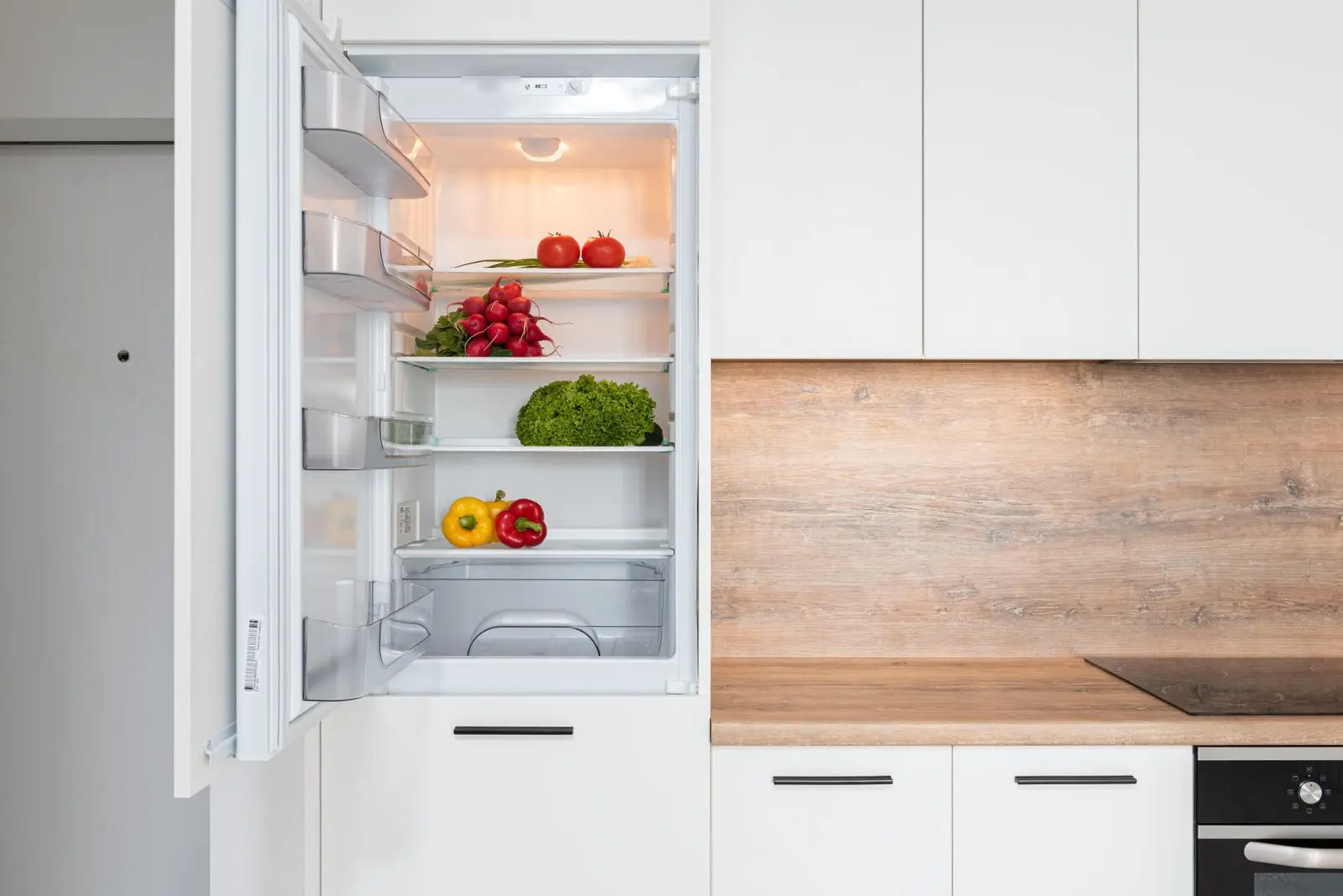
After the lights come back on, most people stand at the open fridge asking the same thing: is the food safe after the power outage, or does it all go in the trash? Guessing is how good food gets wasted and bad food gets eaten. A fridge thermometer turns that guess into a number you can act on.
The two numbers to remember
The FDA says the refrigerator should be at or below 40 °F and the freezer at or below 0 °F. USDA's Food Safety and Inspection Service (FSIS) explains why 40 matters: harmful bacteria grow very slowly below 40 °F and multiply rapidly between 40 and 140 °F, the range often called the danger zone.
| Refrigerator | 40 °F or below (FSIS suggests aiming for 38 to 40 °F) |
|---|---|
| Freezer | 0 °F or below (FSIS suggests 0 to 2 °F as the check range) |
| Closed fridge, no power | Keeps food cold for about 4 hours |
| Closed full freezer, no power | About 48 hours (about 24 if half full) |
Which thermometer to use
The dial or display on your fridge is a setting, not a measurement. FSIS recommends an appliance thermometer, which measures the air inside the fridge or freezer and is designed to be accurate at cold temperatures. Most are either liquid-filled (a colored liquid rises in a glass tube) or bimetallic-coil (a dial with a pointer). Some hang from a rack, others sit on a shelf.
A food thermometer is different: you put it into the food itself. It's useful after an outage to check a specific item, like a package of chicken or a container of leftovers.
Where to put it and how to check it
- Fridge: FSIS suggests placing the thermometer in a glass of water in the middle of the refrigerator, waiting 5 to 8 hours, then reading it. If it isn't 38 to 40 °F, adjust the control and check again after another 5 to 8 hours.
- Freezer: place the thermometer between frozen food packages, wait 5 to 8 hours and look for 0 to 2 °F.
- Leave them there. FSIS notes that keeping thermometers in the fridge and freezer at all times can be critical in a power outage, because the reading is waiting for you when the power comes back.
During the outage
- Keep the doors closed as much as possible. That is what makes the 4-hour and 48-hour numbers possible.
- If the power will be out for more than 4 hours, the FDA suggests moving refrigerated food into coolers with ice or frozen gel packs. Clemson Extension adds: keep a thermometer in the cooler too, so you know the food stays at 40 °F or below.
- For a long outage, dry ice or block ice helps. The FDA says 50 pounds of dry ice should keep an 18-cubic-foot, fully stocked freezer cold for two days.
- Perishable food left at room temperature for 2 hours or more (1 hour if it's above 90 °F outside) should be discarded.
For a fuller outage plan, including a pantry that doesn't need a fridge at all, see our guide on how to store food without a refrigerator.
Free printable: water bath or pressure canner?
Building a shelf-stable backup that doesn't need a fridge? One page with which foods go in which canner, the "don't can" list and pressure by elevation.
Get the free cheat sheet →Based on USDA guidance · printable PDF
When the power comes back: keep or toss?
Freezer. If the freezer thermometer reads 40 °F or below, the FDA says the food is safe and may be refrozen. No thermometer? Check each package. Food that still has ice crystals or is at 40 °F or below can be refrozen or cooked. Texture may suffer, but safety is what counts here.
Refrigerator. If the power was out for no more than 4 hours and the doors stayed closed, refrigerated food should be safe. If it was longer, check the fridge thermometer or the food itself. The FDA says to discard refrigerated perishables (meat, poultry, seafood, milk, eggs and leftovers) that have been above 40 °F for 4 hours or more. Perishables measuring 45 °F or below with a food thermometer should be safe, but cook and eat them as soon as possible.
One honest limit: an appliance thermometer shows the temperature now, not how long the fridge spent above 40 °F. Combine the reading with what you know about how long the power was off and how often the door was opened. If you can't tell, remember the FDA's warning that you can't rely on appearance or odor, and lean toward throwing it out. Clemson Extension puts it plainly too: never taste food to decide whether it's safe.
Frequently asked questions
Is food safe after a power outage if the fridge still feels cold?
Not necessarily. "Feels cold" isn't a number. Check an appliance thermometer or measure the food with a food thermometer. Refrigerated perishables that were above 40 °F for 4 hours or more should be discarded, according to the FDA.
Where should a fridge thermometer go?
USDA FSIS suggests the middle of the refrigerator, in a glass of water when you are checking the setting. In the freezer, put it between frozen packages.
Can I refreeze food that thawed during a power outage?
If it still contains ice crystals or is at 40 °F or below, the FDA says it's safe to refreeze or cook. The quality may be lower.
How long can a freezer go without power?
A full freezer holds its temperature for about 48 hours with the door closed, a half-full one for about 24 hours.
Sources: U.S. Food and Drug Administration, "Food and Water Safety During Power Outages and Floods"; USDA Food Safety and Inspection Service, "Appliance Thermometers"; Clemson Cooperative Extension HGIC, "Food Safety in Power Outages". Checked on November 19, 2026. This article is educational and is not a substitute for local emergency instructions.

Free guide
10 healing herbs you can grow at home
Get our printable Backyard Herbal Starter Guide free: planting, harvesting and safety notes for chamomile, calendula, echinacea and more.