Home › Health at home
Home first aid kit checklist: what to keep and why
Short answer: a good home first aid kit checklist starts with the American Red Cross list for a family of four: bandages in several sizes, sterile gauze pads and rolls, tape, antiseptic wipes, antibiotic and hydrocortisone ointment, an instant cold compress, gloves, tweezers, a non-glass thermometer, an emergency blanket and a first aid guide. Add your family's own medicines and emergency phone numbers, keep it in one place everyone knows, and check expiration dates regularly. A kit is for minor injuries and for the minutes before help arrives; it never replaces calling 911.
The Red Cross checklist for a family of four
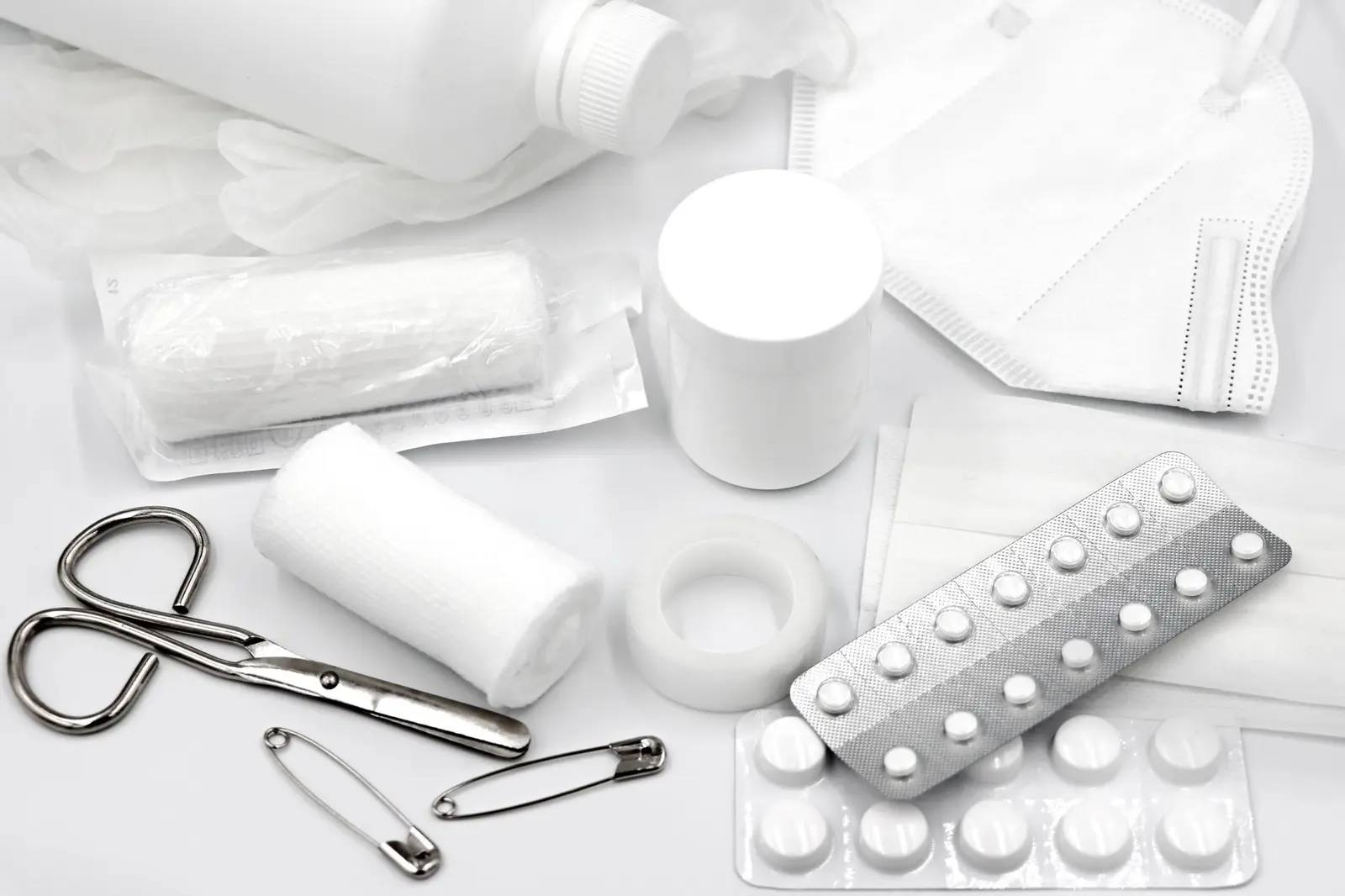
The American Red Cross publishes one of the clearest lists. Whether you buy a ready-made kit or build your own, it recommends these items for a family of four:
- 2 absorbent compress dressings (5 x 9 inches)
- 25 adhesive bandages in assorted sizes
- 1 roll of adhesive cloth tape (10 yards x 1 inch)
- 5 antibiotic ointment packets (about 1 gram each)
- 5 antiseptic wipe packets
- 2 packets of aspirin (81 mg each)
- 1 emergency blanket
- 1 breathing barrier with a one-way valve
- 1 instant cold compress
- 2 pairs of nonlatex gloves (size large)
- 2 hydrocortisone ointment packets (about 1 gram each)
- 1 gauze roll (roller) bandage, 3 inches wide
- 1 roller bandage, 4 inches wide
- 5 sterile gauze pads, 3 x 3 inches
- 5 sterile gauze pads, 4 x 4 inches
- 1 oral thermometer (non-mercury, nonglass)
- 2 triangular bandages
- Tweezers
- Emergency first aid instructions
Tip: print this page and tick each line as you pack it.
What doctors add for a home kit
A home kit can be bigger than a car or hiking kit. MedlinePlus (the National Library of Medicine), the American Academy of Family Physicians (AAFP) and the American College of Emergency Physicians (ACEP) suggest a few extras worth considering:
| Wraps and splints | An elastic bandage for wrist, ankle, knee and elbow injuries, aluminum finger splints, and a triangular bandage that doubles as an arm sling (MedlinePlus). |
|---|---|
| Cleaning and comfort | Sterile eyewash (such as contact lens saline), calamine lotion for stings or poison ivy, hand sanitizer, sterile cotton swabs, and scissors with rounded tips to cut tape, gauze or clothing. |
| Medicines | Pain and fever relievers, an antihistamine for allergic reactions, and a syringe, medicine cup or dosing spoon so children get the right dose. If someone has a life-threatening allergy, ACEP says the kit should hold the epinephrine their doctor prescribed. |
| Paperwork | Emergency numbers (your doctor, your pediatrician, Poison Control at 1-800-222-1222), a medication and allergy list for each person, and medical consent forms for anyone who looks after your children (ACEP). |
| A real guide | Both ACEP and the Red Cross include first aid instructions in the kit. ACEP also recommends taking a first aid class and learning CPR. |
Free printable: the other half of being ready at home
Your kit is ready; your pantry is next. Our one-page cheat sheet covers which foods you can safely put up at home, the "don't can" list, and pressure by elevation.
Get the free cheat sheet →Based on USDA guidance · printable PDF
A word about medicines in the kit
- Aspirin is not for kids. The AAFP and ACEP both say not to give aspirin to children and teenagers because of the risk of Reye's syndrome, a rare but serious illness linked to aspirin during viral infections (NIH). Healthcare professionals recommend acetaminophen or ibuprofen for children instead.
- Watch hidden doubles. ACEP warns that some cold medicines already contain acetaminophen or ibuprofen, which makes accidental overdoses easier. Read every label.
- Store medicines as the label says. Some need the fridge, so they can't live in the kit. Throw out anything expired.
Where to keep it and how often to check it
MedlinePlus says to keep all your supplies in one place so you know exactly where they are. ACEP suggests a clear, waterproof plastic container that's easy to spot, and says every family member and caregiver should know where it is and how to use each item. The AAFP suggests a spot away from young children; ACEP adds safety caps on medicines if you have small kids.
The Red Cross recommends keeping a kit at home and in the car. Check it regularly: replace anything you used, and swap out items past their expiration date. If you also keep supplies for power outages, our guides on storing emergency water and storing food without a refrigerator follow the same idea.
When a first aid kit is not enough
A kit handles scrapes, small burns, splinters, stings and sprains. For chest pain, trouble breathing, severe bleeding, a head injury, signs of a stroke, a serious burn or a possible poisoning, call 911 (or Poison Control) first and use the kit while you wait. If you're not sure, call.
Want a reference to keep next to the kit?
Some families like a printed book that explains what to do with these supplies when help is far away. We looked at one in our Home Doctor review, including who should skip it. A first aid class, which ACEP and the AAFP both recommend, is worth it either way.
Frequently asked questions
What should be in a home first aid kit?
Start with the Red Cross list above: assorted bandages, gauze pads and rolls, tape, antiseptic wipes, antibiotic and hydrocortisone ointment, a cold compress, gloves, tweezers, a non-glass thermometer, an emergency blanket, a breathing barrier and first aid instructions. Then add your family's medicines, allergy list and emergency phone numbers.
Is a store-bought kit good enough?
It can be. The AAFP says you can buy one from the Red Cross or a drugstore; just open it, compare it with the checklist, add what's missing (especially personal medicines) and learn how to use each item.
How often should I check my first aid kit?
The Red Cross says to check it regularly and replace used or expired items.
Should I keep aspirin in the kit if I have children?
You can keep it for adults, but don't give it to children or teens (AAFP, ACEP). Store all medicines out of children's reach, with safety caps.
Sources (checked November 19, 2026): American Red Cross: Make a First Aid Kit; MedlinePlus: First aid kit; AAFP familydoctor.org: What do I need in my first aid kit?; American College of Emergency Physicians: First aid kit; NIH NINDS: Reye's Syndrome. These organizations do not endorse any product on this site. This article is educational and is not medical advice; see our medical disclaimer.

Free guide
10 healing herbs you can grow at home
Get our printable Backyard Herbal Starter Guide free: planting, harvesting and safety notes for chamomile, calendula, echinacea and more.